
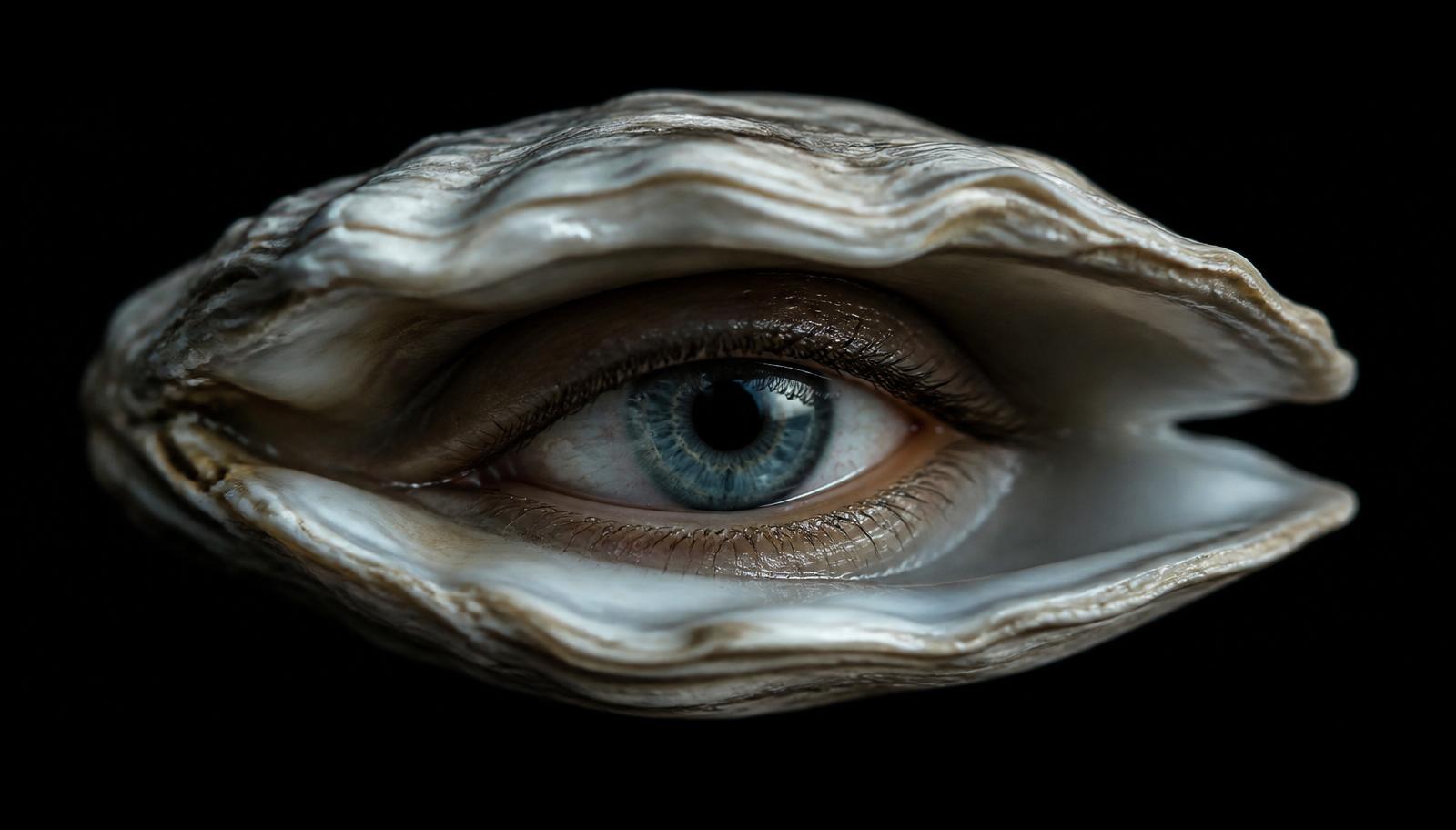
Why does consciousness matter at all?
Many ethical frameworks care about suffering because suffering matters to the individual experiencing it. That is the hidden claim behind almost every argument about how we treat other beings.
Which is why the useful question isn't "Is this animal intelligent?" or "Is it useful?" or "Is it like us?" It's a simpler and much stranger one:
Can something happen to this animal that matters from its own perspective?[9] Values
The question is not, Can they reason? nor, Can they talk? but, Can they suffer?
What are we even talking about?
A useful working definition, borrowed from the philosopher Thomas Nagel: a being is conscious if there is something it is like to be that being.[1] A rock has no perspective. But when the wind moves you, something happens for you — a feeling, a sensation, some private colouring the physics does not directly describe.
Philosophers call the raw felt quality of experience qualia: the redness of red, the ache of an ache. When they talk about phenomenal consciousness, that is what they mean — not thinking, not reasoning, but the fact that experience has a texture at all.
Humans experience the world through our own sensory systems. A bat experiences it through echolocation. A mussel interacts with the world through biological systems very different from ours. The difficulty isn't just a failure of imagination — it's that we don't share the same way of perceiving.[6]
Why even human consciousness isn't solved.
In 1995 David Chalmers drew a line between two kinds of question about the mind.[2] The "easy" ones — easy only by comparison — are about function: how does the brain integrate information, control attention, produce speech? Given time, these look like problems neuroscience will eventually crack.
The hard problem is different. It's not about whether brains exist, or whether neuroscience can explain behaviour. It's specifically about why physical processes should be accompanied by subjective experience at all. Why is there something it is like to see red, and not just a silent process of wavelength-sorting? Nothing in the physics seems to require the feeling.
We don't need to solve the hard problem to live with it. What matters here is a smaller point: if we cannot fully explain our own experience, we should be careful about absolute claims about anyone else's. Interpretation
Nociception, sentience, pain.
A lot of confusion in this conversation comes from words doing too many jobs at once. Three matter most.
Nociception — the biological detection of harmful stimuli. A sea anemone flinches from acid; a plant releases stress chemicals. Nociception is widespread and does not, by itself, require any inner experience.
Sentience — the capacity to have experiences, especially experiences that matter to the individual having them: things that feel good or bad.
Pain — the subjective, felt experience of harm. Pain requires nociception and something more: a perspective for which the signal is unpleasant.[11]
An organism has conscious mental states if and only if there is something that it is like to be that organism — something it is like for the organism.
What we can and cannot honestly say.
Mussels interact with their environment and display behaviours in response to changes around them. They have a very basic nervous system — a small set of ganglia and connecting nerves, described in more detail on the science page.
Mussels do not have a brain.
The absence of a brain does not automatically prove the absence of experience. Evolution has produced many different biological solutions, and scientists continue to investigate how different organisms process information.[7] Uncertain
Responding to the environment is not automatically the same thing as experiencing the environment.
Many systems respond to external changes:
- Plants respond to light, gravity, and damage.
- Thermostats respond to temperature changes.
- Mussels respond to touch, chemicals, and threats.
This isn't a claim that plants, thermostats, and mussels are equivalent — they clearly aren't. The point is narrower: behaviour alone can't tell us where subjective experience begins. It raises a deeper question:
What additional feature turns a response into an experience?
The fact that something detects and reacts to its surroundings does not, by itself, demonstrate that there is a subjective perspective behind that response. Which is why the honest question isn't:
Does the organism respond?
It is:
Is there something it is like to be that organism?
One cow, or many mussels?
This is, arguably, the hardest part of the whole essay. On one side sits a single animal we are almost certain can suffer. On the other, a large number of animals whose capacity for suffering is genuinely unclear.
Strong evidence of experience
- • Vertebrate brain, well-mapped pain pathways
- • Rich behaviour, social relationships
- • Near-certain capacity to suffer
- • Provides many meals over one life
Much greater uncertainty
- • Decentralised nervous system, no brain
- • Response to stimuli documented; felt experience unknown
- • Small, uncertain capacity to suffer
- • Dozens of individuals per meal
How should we compare harms when the probability of suffering differs so greatly?
Utilitarian approaches may argue that small probabilities of harm across many individuals can eventually become morally relevant — the reflection is, in short, can moral concern aggregate? Other ethical approaches disagree, holding that the cow's near-certain suffering is categorically different from many small uncertain flickers, and cannot be traded off against them.[9][10]
Values There is no simple answer. Which arithmetic you find compelling depends on which ethical framework you already lean toward — and being aware of that dependence is part of thinking carefully about the question.
Between imagining too much and dismissing too quickly.
There are two easy mistakes to make when thinking about the inner lives of very different animals. Both feel like common sense from the inside.
Imagining too much
Anthropomorphism — assuming human-like inner experience without evidence. A mussel closes its shell, therefore it "feels afraid". Vivid, but unsupported.
Dismissing too quickly
Assuming that because an organism is very different from us — no face, no brain we'd recognise — nothing meaningful can be happening inside. That confidence is also unearned.
Behaviour can provide clues, but behaviour alone does not reveal subjective experience. It helps to distinguish three different things:
- Detecting a stimulus.
- Responding to a stimulus.
- Experiencing a stimulus.
The goal is the middle position: take the evidence seriously wherever the biology could support experience, without pretending we know more than we do.[6]
Three honest ways to decide.
We will probably never have complete certainty about the inner lives of other organisms. Yet we have to eat something, and every choice is already a decision made under partial information.
- Expected-value approach. Small probabilities multiplied across many individuals may matter. Weigh the low but non-zero moral cost of mussels against whatever they replace on the plate.
- Precautionary approach. Where suffering is even possible, default to caution and abstain.
- Comparative approach. Ask what the mussel is replacing — usually an animal we are much more confident can suffer.
Thoughtful people can disagree here because they start from different ethical assumptions. Which framework you find most convincing says something about the moral commitments you already carry, and that is worth knowing about yourself.
What kind of decision-makers do we want to be?
The purpose of this page has never been to hand you a verdict on mussels. It has been to make the shape of the question visible: what consciousness is, what suffering requires, how to reason when the evidence is thin, and how to notice which assumptions are doing the moral work in your own thinking.
Where would you place your own confidence?
Not what the science says. What you, right now, would honestly bet: what is the chance that a mussel has some faint form of subjective experience?
The question is not only whether mussels are conscious.
It is also what kind of decision-makers we want to be when the answer is unclear.
Framed subjective experience with the question 'What is it like to be a bat?'
Named the 'hard problem': why physical processes give rise to any inner experience at all.
Argued that consciousness is less unified and more constructed than it feels from the inside.
Grounds moral concern in the capacity for suffering; has questioned whether eating bivalves is ethically comparable to eating other animals.
Pioneering research on pain and nociception in fish and aquatic animals.
Leads work on invertebrate sentience and how policy should respond to uncertainty about it.
Propose that minimal consciousness co-evolved with associative learning across many lineages.
A fuller list of papers and books is in the resources section and in the bibliography below.
Bibliography
Every factual claim on this page is linked back here. We cite peer-reviewed papers, official reports, and recognised research organisations. Where a claim rests on interpretation or values, we say so with a certainty tag rather than a citation.
- [1]Nagel, T. (1974). What Is It Like to Be a Bat?. The Philosophical Review, 83(4) ↩
- [2]Chalmers, D. (1995). Facing Up to the Problem of Consciousness. Journal of Consciousness Studies, 2(3) ↩
- [3]Dennett, D. (1991). Consciousness Explained. Little, Brown and Co. ↩
- [4]Dehaene, S. (2014). Consciousness and the Brain. Viking ↩
- [5]Tononi, G. (2004). An information integration theory of consciousness. BMC Neuroscience, 5:42 ↩
- [6]Allen, C. & Trestman, M. Animal Consciousness. Stanford Encyclopedia of Philosophy ↩
- [7]Birch, J. (2020). The search for invertebrate consciousness. Noûs ↩
- [8]Ginsburg, S. & Jablonka, E. (2019). The Evolution of the Sensitive Soul. MIT Press ↩
- [9]Singer, P. (1975). Animal Liberation. HarperCollins ↩
- [10]Regan, T. (1983). The Case for Animal Rights. University of California Press ↩
- [11]Sneddon, L. U. (2015). Pain in aquatic animals. Journal of Experimental Biology, 218 ↩
- [12]Elwood, R. W. (2019). Discrimination between nociceptive reflexes and more complex responses consistent with pain in crustaceans. Philosophical Transactions of the Royal Society B, 374 ↩
- [13]Birch, J. et al. (2021). Review of the evidence of sentience in cephalopod molluscs and decapod crustaceans. LSE ↩
- [14]Animal Ethics (2021). Snails and bivalves: a discussion of possible edge cases for sentience ↩